
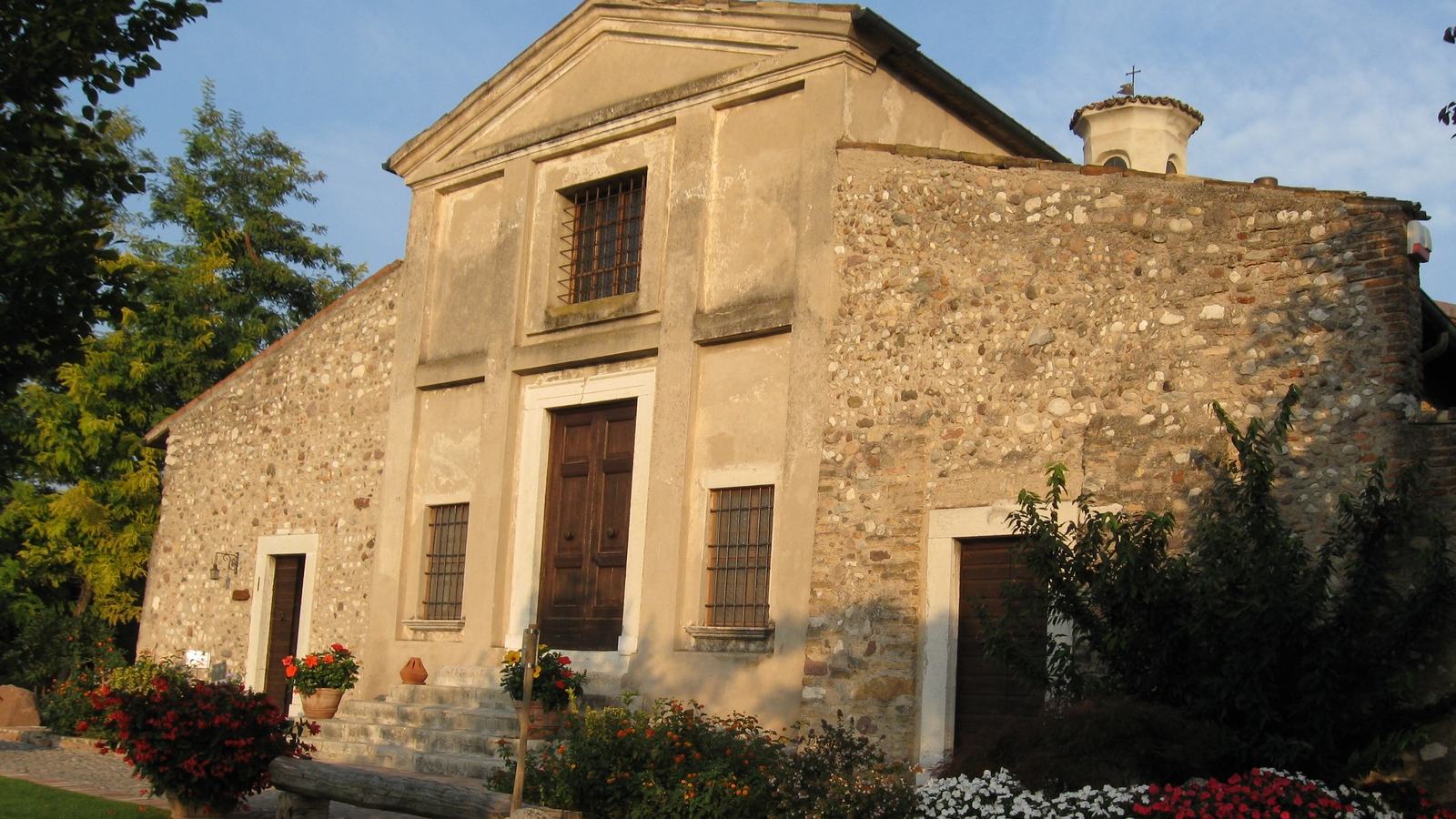
It is essentially a place of silence and prayer. For those who wish to do so, it is possible to visit it or to be received in the guest quarters by making an arrangement with the monk who resides there. It was built in three successive periods: - around the middle of the 15th century, the part corresponding to the altar and the current presbytery was erected, probably on an earlier layer. It is from this first small construction that the name 'Ghisiola' (little church) comes - around 1520, the front part was extended - in the early 1600s, the skylight and the two side buildings were added. The hermitage appears as a typical folk building with very simple architectural lines, which harmonise well with the surrounding hillside environment. Of interest is the construction technique, typical of rural houses, using expertly arranged moraine material.
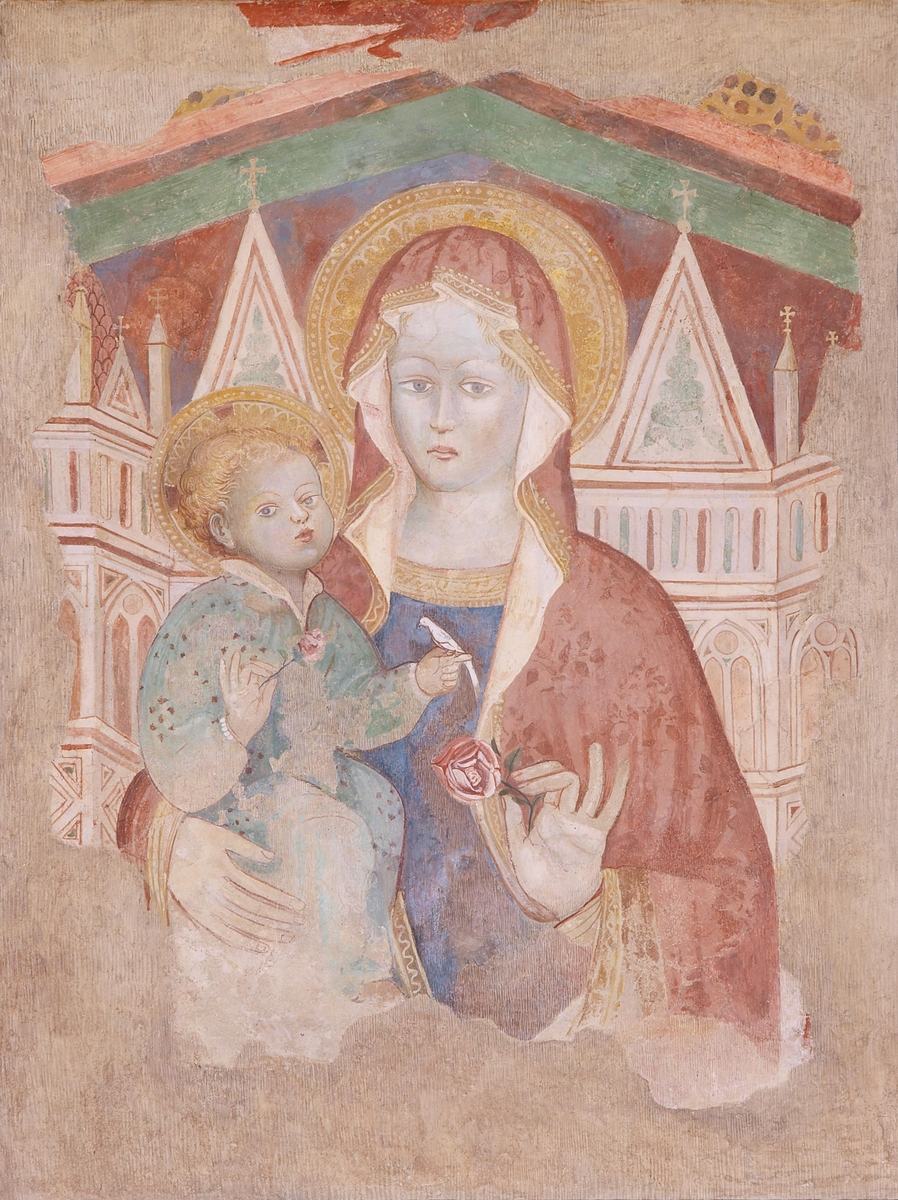
Inside the church:
The archives show how this small hermitage has been used and lived in the most diverse ways over the centuries. Initially just a small shrine, it appears for the first time in the report of the pastoral visit of the bishop of Brescia in 1556 as a church "without a door" and in 1566 as "without a dowry", "without a pallium, without a cross, candelabra and with a broken altar-step". Registered as "consecrated" by the visitor Cristoforo Pilati in 1578, it saw the presence of a hermit monk in 1657 ("Ecclesiae sancta Mariae a Rosa omnibus necessariis provisa sufficienter ubi habitat eremita"). In the last century, the complex saw the presence of a family for many years, but was then abandoned again and soon fell into decay. In 1979 a first substantial phase of restoration began, which made the hermitage habitable again (community of the Dehonian Fathers since 1984). Left uninhabited again, since July 2007 the parish of Castiglione has entrusted it to a young solitary monk. Since 2018 the hermitage has hosted the diocesan youth point.