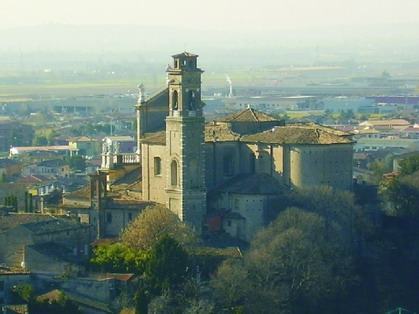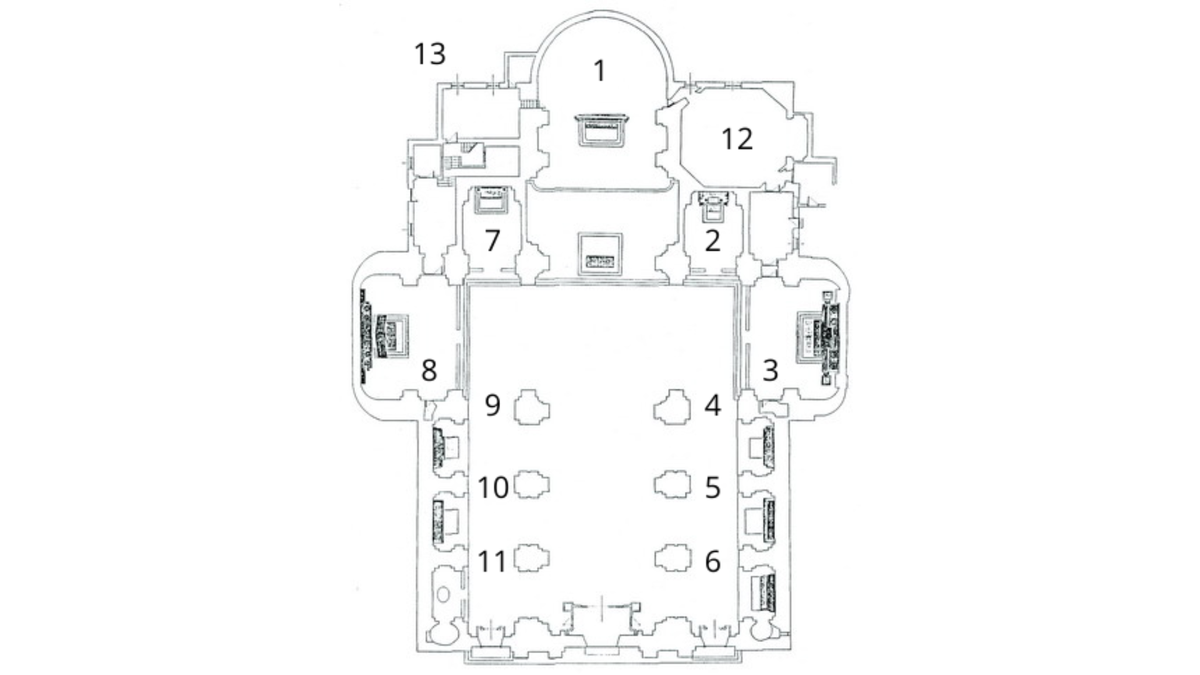
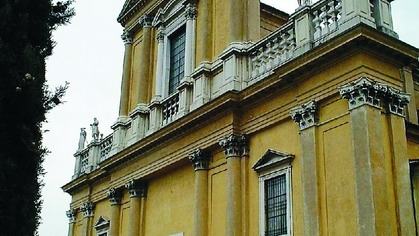
From an artistic point of view, the Cathedral is a significant example of the transition from Baroque architectural forms to those of 18th-century Neoclassicism. The imposing and majestic façade (36.75 m wide, 38 m high) is divided by semi-columns and pilasters with Corinthian capitals; it is adorned by an elegant balustrade and seven marble statues depicting the patron saints Luigi Gonzaga. The spacious, bright and striking interior for the balance of the simple and grandiose neoclassical lines, has three naves divided by six gigantic pillars with rich capitals. In the vault there are three minor domes and a central one. The titular saints of the church are the martyred Saints Nazario and Celso, depicted together with St. Louis in the altarpiece of the high altar, the work of Luigi Sigurtà. There are numerous testimonies to the Castiglionese saint in this parish church. On 20th April 1568, Marta Tana and Ferrante Gonzaga had their first-born son Luigi baptised here; on 22nd July 1580, from the hands of Cardinal San Carlo Borromeo, Luigi received his First Communion here; one of his relics is placed in the third chapel on the right of Castiglione delle Stiviere; finally, at the foot of the presbytery, his mother, Donna Marta Tana of Santena, a woman witness to great Christian virtue, is buried here.
The church of Ss. Nazario and Celso took on further importance in 1607, when Prince Francesco Gonzaga, thanks to his diplomatic services to the Holy See, obtained the nomination of the parish church as Collegiate Church, i.e. 'quasi episcopalis' seat, in which the Abbot presided with six Canons. In 1762, reconstruction of the building, which had become insufficient for the needs of the community, was begun. Based on a design by Giambattista Groppi, the remains of the castle, destroyed by the French in 1706, were used, moved to this hill by long passages of volunteers from Castiglionese. Thus the place where St. Louis had spent his early childhood with his family, 'his home', was used to build the 'House of the Community'. With the advent of Josephinism, the church lost its canonical privileges and on the arrival of Napoleon, it was despoiled of several of its possessions; the same happened to all the other Italian churches when the 'uom fatal' passed through.